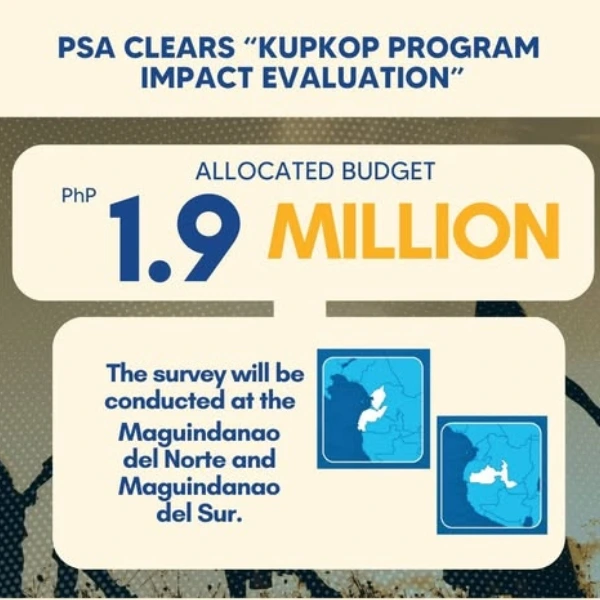
PSA Clears Impact Evaluation of the Kupkop Program to Strengthen Social Protection
What is the Kupkop Program?
The word “Kupkop” means “to take under one’s care” or to embrace. True to its name, the Kupkop Program is a flagship initiative of the Ministry of Social Services and Development (MSSD) in the Bangsamoro Autonomous Region in Muslim Mindanao (BARMM).
The program is designed specifically for orphans aged 0 to 17 years who are living in poverty or vulnerable situations. To help these children, the government provides a monthly cash subsidy of ₱5,000. This money is usually released quarterly (₱15,000 every three months) to help guardians or foster families pay for the child’s most basic needs. Check TESDA skills passport App for free training and jobs.
The Main Goals of the Program
- Nutrition: Ensuring children have enough healthy food to grow.
- Education: Paying for school supplies, books, and uniforms.
- Health: Providing access to medical check-ups and medicine.
- Safety: Supporting stable and caring living arrangements for children who have lost their parents.
Understanding the PSA-Cleared Impact Evaluation
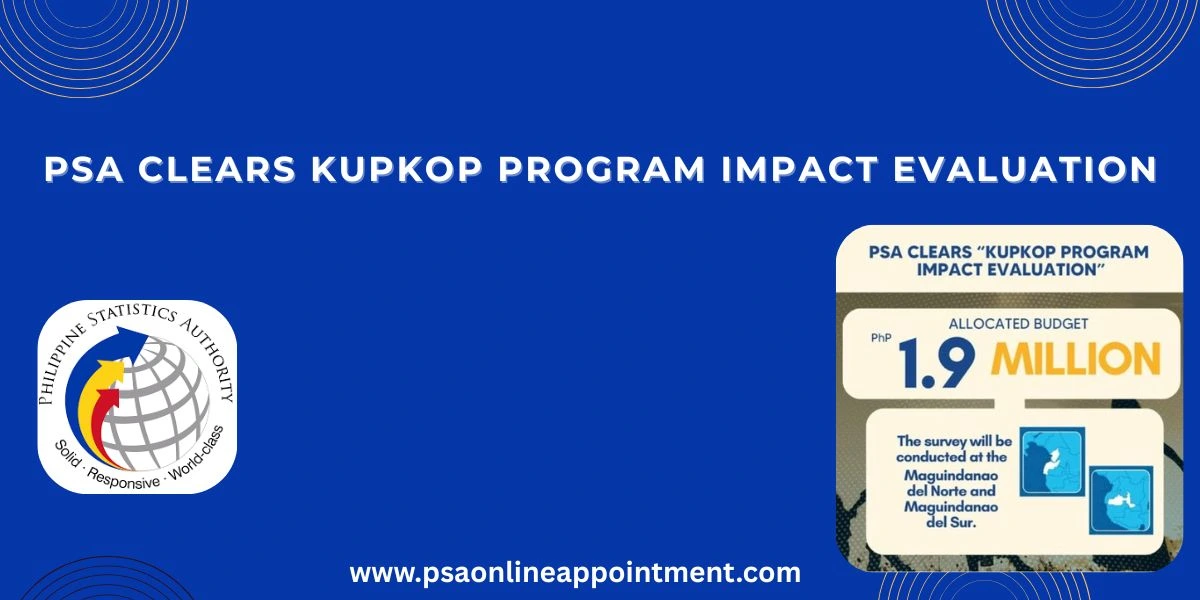
The Philippine Statistics Authority (PSA) plays a “gatekeeper” role for government surveys. By clearing this evaluation, the PSA ensures that the survey follows strict scientific standards and that the data collected will be reliable.
The evaluation will be conducted by DEPDev (the Department of Economy, Planning, and Development). Their mission is to collect enough data to measure the “causal impact” of the program.

What does “causal impact” mean? It means the researchers want to see exactly how much the lives of these orphans have improved because of the Kupkop Program. They compare the health, education, and well-being of children in the program to those who are not, helping the government understand if the ₱5,000 monthly aid is truly making a difference.
Importance of Survey
This evaluation is a sign of “Data-Driven Strengthening.” Instead of just giving out money and hoping for the best, the government is using facts and figures to make the program better.
- Transparency: It shows the public and donors exactly how government funds are being used.
- Evidence-Based Improvement: If the survey finds that certain children still struggle with school fees despite the aid, the Ministry can adjust the program to provide more targeted help.
- Future Funding: Strong data proving that a program works makes it much easier to get a bigger budget to help even more orphans in the future.
How Beneficiaries Can Participate
If you or someone you know is a guardian of a Kupkop beneficiary, you may be asked to participate in this survey. Here is what you should know:

- Participation is Encouraged: Your honest answers help the government improve the program for everyone.
- Data Privacy: All information collected is strictly confidential under the Data Privacy Act. Your name and personal details will never be shared publicly.
- Simple Process: Enumerators (data collectors) will visit households to ask questions about the child’s schooling, health, and how the cash assistance is being spent.
Read Also: PSA Online Appointment Calasiao City and Contact Number
Conclusion
The clearance from the PSA for the Kupkop Program Impact Evaluation is a major win for social welfare in the Philippines. It proves that the BARMM government is committed to not just giving aid, but giving effective aid.