Did You Missed Deadline? Simple Guide to Late Birth Registration
Having a birth certificate is more than just having a piece of paper. In the Philippines, it is your official proof that you exist in the eyes of the law. Without it, simple things like going to school, getting a job, or traveling abroad become very difficult.
Normally, parents have 30 days to register a new baby. If you missed that window, don’t worry the law allows you to register later. This is called “Delayed Registration.” Because it is late, the government just needs a bit more evidence to make sure the records are honest and accurate.
Step 1: Get Your Documents Ready
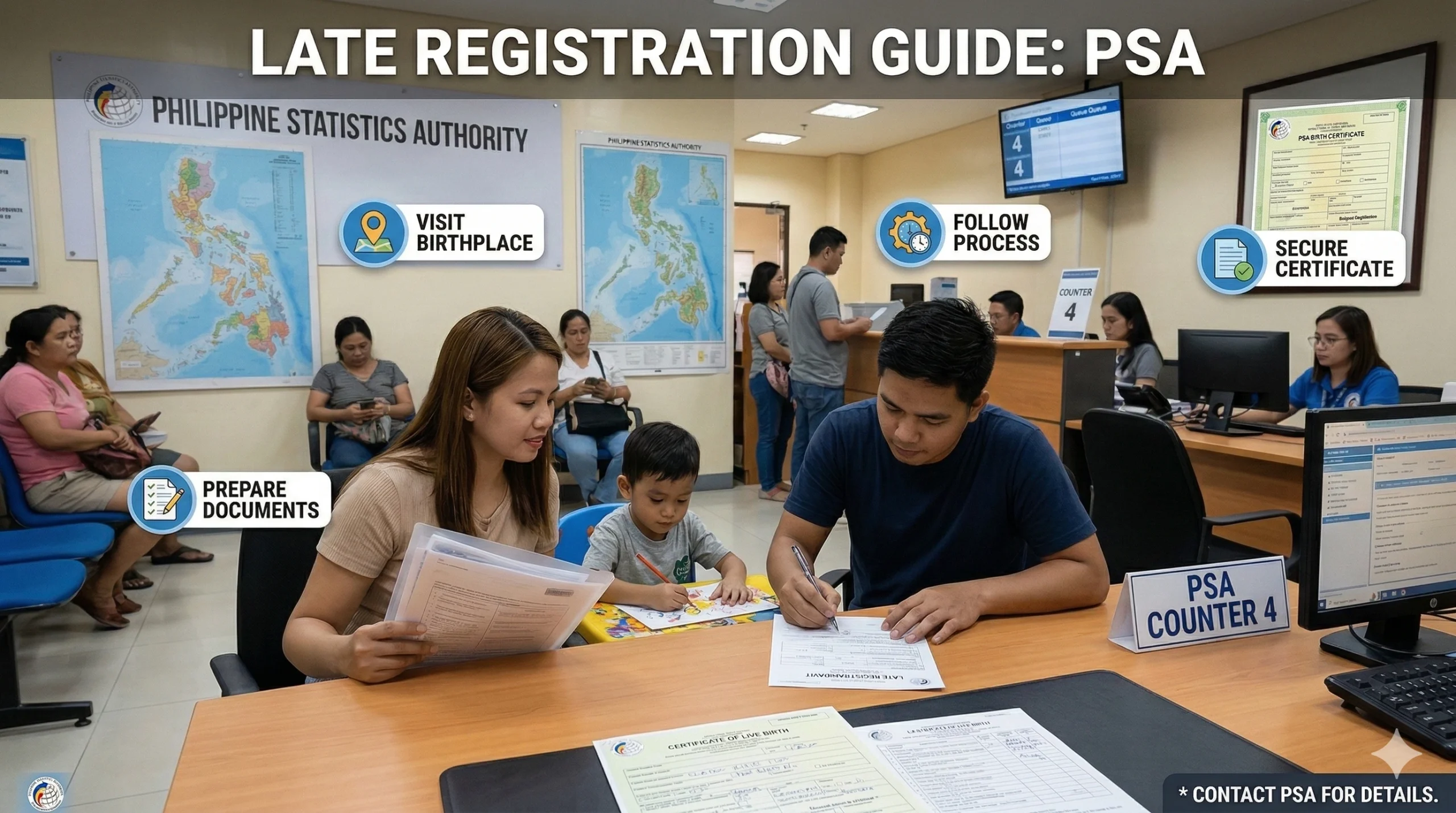
The papers you need depend on how old the person is. You want to show the government that this person has been living as who they say they are since they were born.
For Children (Under 18)
- Certificate of Live Birth (COLB): You need four copies, filled out correctly.
- The “Why” (Affidavit): A sworn statement explaining why it wasn’t done on time.
- School or Church Records: A Baptismal certificate or school report cards are great proof.
- Medical Records: Early childhood check-up cards or doctor’s notes.
For Adults (18 and older)
Adults need all the items mentioned above, plus proof of their adult life:
- Clearances: An NBI or Police clearance shows you are a law-abiding citizen.
- Official IDs: Anything from the SSS, GSIS, or a Voter’s ID.
- Marriage Records: If you are married, your marriage certificate helps prove your identity.
Step 2: Visit the Right Office
You must go to the Local Civil Registry Office (LCRO) in the town or city where the birth actually happened. If you were born in a hospital in Quezon City but live in Baguio now, you must file the papers in Quezon City.
Step 3: The 10-Day Public Notice
Once you submit your papers and pay the fee, there is a mandatory waiting period. The office will post a notice about your application on their public bulletin board for 10 days. This gives anyone a chance to speak up if they think the information is not true. If no one objects after 10 days, the Civil Registrar will officially sign your birth record.
Step 4: Get the Official PSA Copy
After the local office finishes their work, they send the data to the national PSA database. This part takes a few weeks or months. Once it is in the system, you can easily order your official “Security Paper” copy online and have it delivered to your home.

The government needs extra proof that your birth details are real. Gather documents that show your identity over time.
- • 4 copies of Birth Form (COLB)
- • Baptismal Certificate
- • Early School Records
- • NBI or Police Clearance
- • Voter’s ID or SSS records
- • Marriage Cert (if married)
You must file your application at the Local Civil Registry Office (LCRO) of the city or municipality where you were actually born.
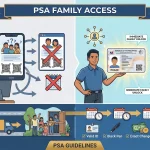
After filing, the law requires a 10-day notice to be posted on the office bulletin board to allow for public objections.
Once approved locally, your record is sent to the national PSA database. After a few weeks, order your official copy online.